“If we only teach children the names of things, we limit what they can say. When we teach core words, we give them language they can use everywhere.”
One of the biggest shifts in my teaching happened when I stopped focusing on teaching students hundreds of individual vocabulary words and started focusing on core vocabulary instead.
As a special education teacher, I wanted my students to communicate—not just label pictures.
Free Core word Book: More Please

I wanted them to tell me:C
- “I want more.”
- “I don’t like it.”
- “Can you help?”
- “Go play.”
- “Stop.”
- “I can.”
- “Not me.”
Those messages are built with core words.
What Are Core Words?
Core words are the small group of words we use over and over again in everyday conversation.
Although they make up only a small percentage of our vocabulary, they account for most of what we say throughout the day.
Examples include:
Unlike fringe vocabulary (words like dinosaur, cookie, truck, or giraffe), core words can be used in almost every environment and conversation.
For example, the word go can be used to say:
- Go outside.
- Go home.
- Go fast.
- Go play.
- Ready, set, go!
- My turn to go.
One word…endless opportunities.
Why Core Are Core Words So Powerful?

When students learn core vocabulary, they aren’t memorizing flashcards.
They’re learning language.
Core words allow students to:
- ✔ ask for help
- ✔ make choices
- ✔ protest appropriately
- ✔ answer questions
- ✔ comment
- ✔ direct others
- ✔ describe
- ✔ tell stories
- ✔ participate in classroom routines
These are the kinds of communication skills that lead to greater independence.
Core Words Support Every Communicator
Whether a student uses:
- an AAC device
- a communication board
- sign language
- gestures
- verbal speech
- eye gaze
…core vocabulary benefits everyone.
In my classroom, we model core words constantly without expecting students to immediately imitate us.
Instead, we create opportunities to hear, see, and experience those words naturally throughout the day.
Repeated exposure is what helps language grow.

Why We Teach Core Words in Context
One mistake I often see is teaching a word in only one way.
For example:
Open
Open the door.
Open the box.
Open your lunch.
Open a book.
Open the cabinet.
Open the chips.
The meaning stays the same, but students begin to understand that one word works in many different situations. That flexibility is one of the biggest strengths of core vocabulary instruction. Instead of memorizing one sentence, students begin learning how language works.
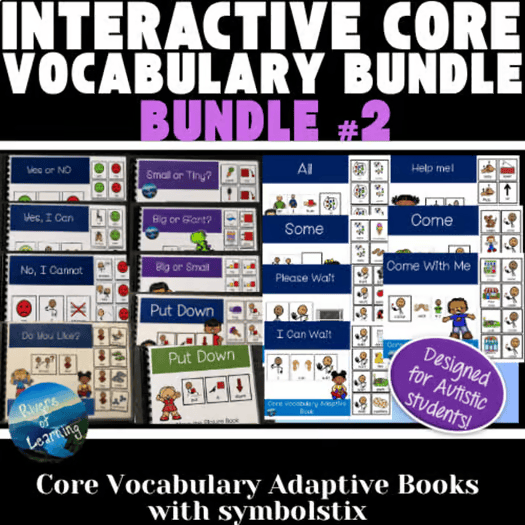
Why I Created Interactive Core Vocabulary Books


After years of searching for meaningful core vocabulary materials, I realized I kept finding one of two things:
- books that focused on labeling pictures
- drill-style activities that didn’t feel like real reading.
I wanted something different. I wanted books that:
- practiced one or two core words repeatedly
- built early literacy skills
- encouraged communication
- worked with AAC systems
- were engaging enough that students wanted to read them again and again
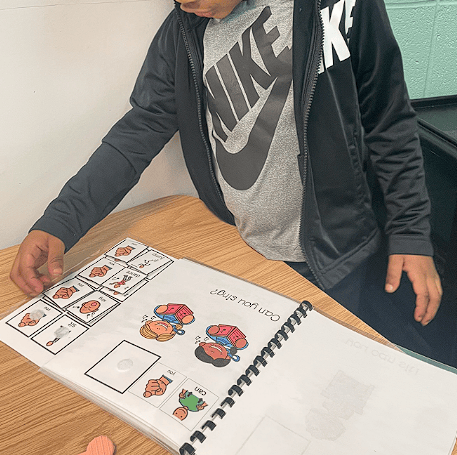
So I started creating my own. Each interactive book combines repeated reading with hands-on picture matching so students actively participate in every page.
Rather than simply listening to a story, students complete each sentence by matching pictures, practicing core vocabulary, and seeing how those words are used in meaningful contexts.
More Than Just One Word
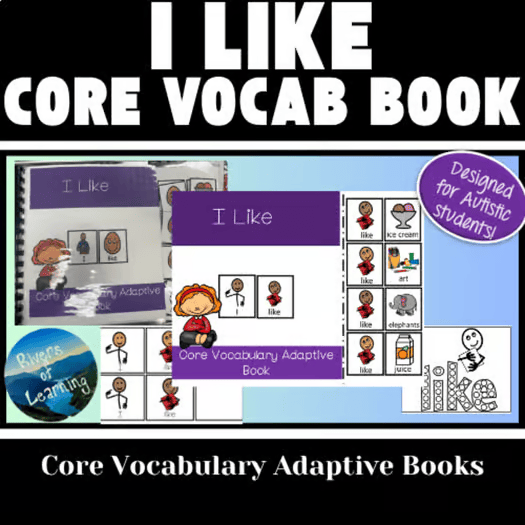
Many of my books focus on a single target word, but they also intentionally build simple sentences using additional core vocabulary.
For example:
Do You Like?
Students practice:
- do
- you
- like
- yes
- no
while answering questions about their own preferences.
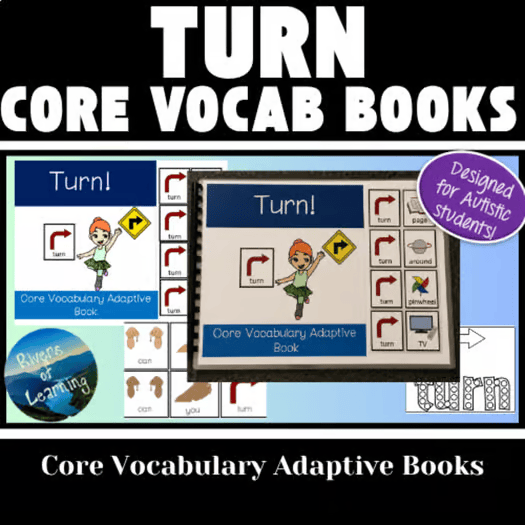
In Turn, students learn that turn doesn’t always mean the same thing.
They might:
- turn a page
- turn around
- turn on the TV
- turn a pinwheel
The variety of examples helps students understand that one core word can have many different meanings and uses across environments.
That flexibility is exactly what makes core vocabulary so powerful.
Teaching Tips for Core Vocabulary
Some of the best core vocabulary instruction happens during everyday routines. Try modeling words during:
🍎 snack
🎨 art
🧩 centers
📚 shared reading
🚲 playground
🎵 music
🧺 clean up
Rather than quizzing students, model the language you want them to hear. Use the words naturally. Repeat them often. Celebrate every attempt to communicate, regardless of whether it is spoken, signed, selected on an AAC device, or communicated another way.
Language grows through meaningful interactions—not pressure.
Explore the Interactive Core Vocabulary Collection
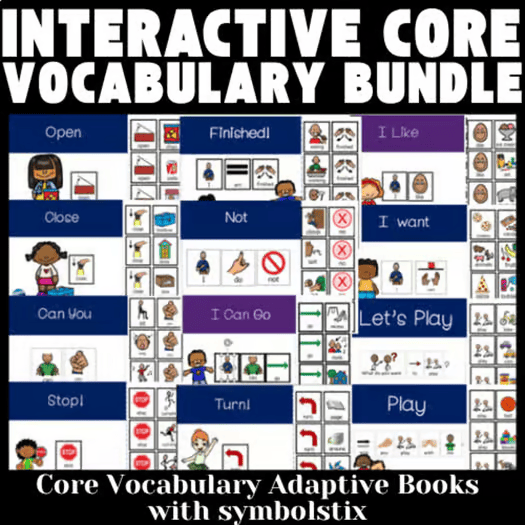
If you’re looking for engaging, hands-on materials that support both literacy and functional communication, my Interactive Core Vocabulary Adaptive Books were created with autistic learners, AAC users, and early communicators in mind.
Each resource includes:
- Interactive adaptive books
- Communication picture cards
- Sentence strips
- Large printable core word cards
- Word-building activities
- Color and black-and-white printable supports
Whether you’re introducing a student’s very first core words or expanding their communication system, these books provide repeated opportunities to practice language in meaningful, engaging ways.
Final Thoughts

Communication is about so much more than naming objects.
It’s about expressing ideas, making choices, asking questions, sharing opinions, and connecting with other people.
When we teach core words, we’re giving students tools they can use every single day—in every classroom, every home, and every community.
And that’s why I believe core vocabulary deserves to be at the heart of communication instruction.
Leave a Reply