

Creating Little AAC Devices for Stuffed Animals
Sometimes small ideas can make big differences. That’s how my little stuffed animal AAC devices came to be.
As a special education teacher who works with autistic preschoolers, I spend a lot of time thinking about how we can make AAC meaningful, accessible, and—most importantly—part of everyday life.
And one thing I know about young children?
They love to make their toys talk. I’ve watched them over and over use the stuffed animals to point to things, pretend to color, make them sit, and make them do all the things that they do.
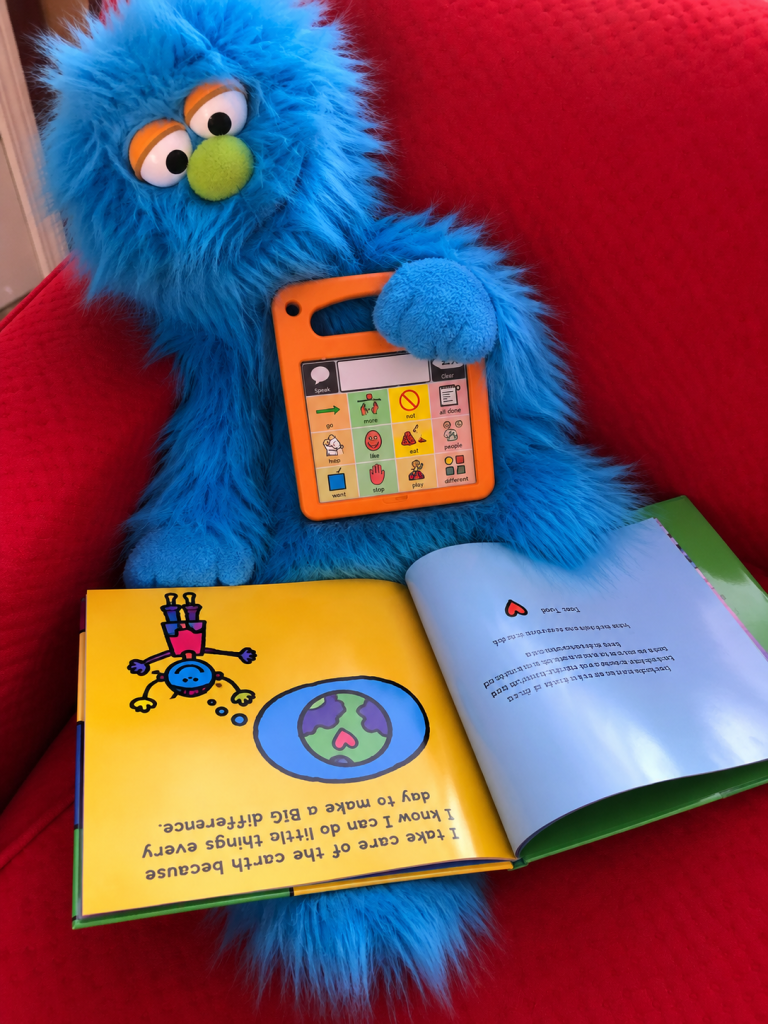
So I when I got my 3d printer, I decided, their stuffed animals needed AAC devices too!
Why do stuffed animals need AAC?
AAC shouldn’t only come out during speech therapy, circle time, or when we are intentionally “working” on communication. Communication happens during play.
When a child is pretending to feed a stuffed animal, maybe the stuffed animal wants more. Maybe it wants to eat. When the stuffed animal falls down, maybe it needs help. Maybe it wants to eat, play, open, look, or come.
When we give a stuffed animal its own little AAC device, we create another natural opportunity for children to see communication modeled in a playful, meaningful way. And sometimes, watching a favorite toy communicate can make AAC feel a little more approachable.

The Power of Modeling
One of the reasons I love using AAC within play is that it gives us opportunities to model language without making communication feel like a test. Instead of asking:
“What do you want?”
over and over, we can simply join the play and model language.
The stuffed animal can “say”:
- MORE!
- GO!
- HELP!
- OPEN!
- EAT!
- STOP!
The child doesn’t have to perform for us. They get to watch communication happen. They get to explore. They get to play.
And they can use their own AAC system—or their voice, gestures, signs, facial expressions, or whatever form of communication works for them—to participate.
Using Them in the Classroom
These little AAC devices can be used in so many different ways. I created a template which can be used to change out the AAC picture so that we can use them many ways with the correct words on them! Click here to download both the editable and already designed templates!
Pretend Play
Give a stuffed animal its own device during dramatic play. The animal can “tell” you what it wants to do: Go, Eat, More, Help, Stop.
This can open up an entire pretend conversation. They can ask and answer questions, make comments such as, “good job!” and “wow”
Read-Alouds
Bring your AAC-equipped stuffed animal along during story time. The stuffed animal can react to the story, request something, or comment on what is happening. This gives children another opportunity to see AAC being used for more than requesting.
Modeling
Sometimes I’ll use the stuffed animal as my communication partner. I can model a word on the toy’s AAC device while I’m playing. This can be especially helpful when a child is more interested in watching the toy than watching an adult model.
Turn-Taking
The stuffed animal can become part of a simple back-and-forth interaction. The child communicates. The stuffed animal “communicates.” The adult responds. Suddenly, we’re practicing communication through play and connection, rather than through a worksheet or drill.
How I Made Them
I wanted these to be small enough that a stuffed animal could “hold” them, but still large enough to be functional and easy for little hands to explore. I designed the cases to hold a small AAC communication display and created different versions so they could work with different communication systems. They’re made using 3D-printed PLA, and I’ve created several fun colors to choose from.
The devices are approximately 4 inches by 3.5 inches, making them a great size for stuffed animals, pretend play, classroom centers, and AAC modeling.
And yes… they’re definitely adorable. But the cuteness isn’t really the point.
The point is communication.
Making AAC Part of Childhood
I think sometimes we unintentionally separate AAC from childhood. We have the “AAC activity.” The “AAC lesson.” The “AAC time.” But AAC is communication—and communication belongs everywhere.
It belongs in the block center. It belongs at the sensory table. It belongs during snack. It belongs on the playground. It belongs in dramatic play.
And yes…
It belongs with stuffed animals. When we put communication tools into the hands of favorite toys, we’re sending an important message:
Communication is for everyone.
Communication belongs everywhere.
And communication can be fun.
Want One for Your Stuffed Animal?
I’ve made these little AAC devices available in my shop so you can create your own AAC-filled pretend play experiences at home, in therapy, or in the classroom. Each device is 3D printed in PLA and currently comes in several fun color options. They are designed to hold small AAC displays for stuffed animal play and modeling. You can find the available devices in my shop through this link. Then Click here to download both the editable and already designed templates!
And if you make one of your stuffed animals an AAC user, I would absolutely love to see it! Tag me and show me your little communication partner! Because sometimes the best way to make AAC meaningful… is to make it part of the things children already love.

Leave a Reply